
Guide
Chore charts by age: what kids can really do
A chart only works if the chores fit the kid. Here are ideas for each age, how many to start with, and how stars, rewards and pocket money can keep it going without a daily argument.
Three rules before the lists
- Fewer than you think. Two or three chores per kid at the start.
- Do it together first. A chore is taught before it is assigned.
- Make "done" clear. "Tidy your room" is vague. "Clothes in the hamper, books on the shelf" can be checked.
Ages 3 to 5: helping, with a grown-up
Little kids love to help and need pictures, not words. Think: put toys in the bin, carry their plate to the counter, help feed the pet, water a plant. Keep steps to one or two. At this age the chart is mostly the sticker, the star and the celebration, and a routine with big pictures works well. See kids' routines.
Ages 6 to 8: their own small jobs
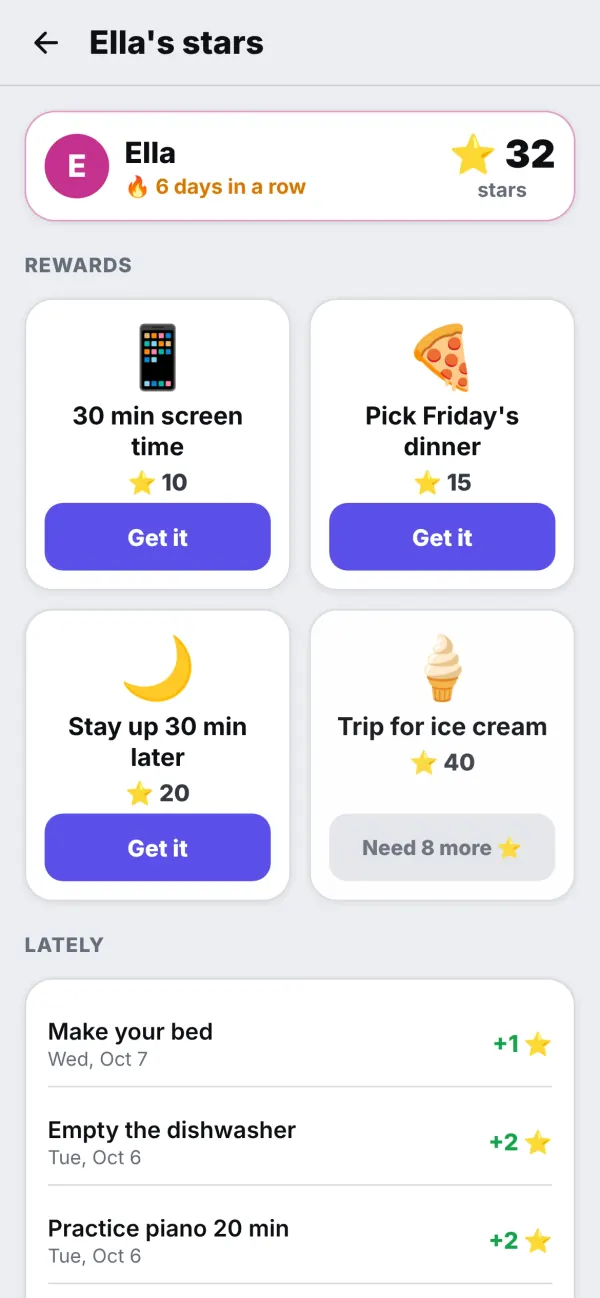
This is the golden age of the chore chart. Make the bed, feed the dog, set the table, put away their laundry, empty the dishwasher's lower rack, read for 15 minutes. Stars matter, and so does a streak: a kid who has done six days in a row wants the seventh. A parent's OK on a chore helps keep "done" honest, and lets you say "not yet" kindly.
Ages 9 to 12: responsibility, and a say
Kids this age can run a whole job: take out the trash on Wednesdays, empty the dishwasher, walk the dog, make a simple dinner once a week. Let them help choose the chores and the rewards. Take-turns chores are fair when siblings share a job, and a weekly allowance with Save, Spend and Give jars starts the money conversation.
Ages 13 to 15: fewer reminders, bigger jobs
Teenagers need fewer, bigger jobs and less nagging. Laundry start to finish, cooking a dinner a week, mowing the lawn, their own school deadlines. Put them on a School list, set deadlines on projects, and let reminders do the asking instead of you.
Stars, rewards and pocket money
A good reward is something the kid chose: screen time, picking Friday's dinner, staying up 30 minutes later, a trip for ice cream. Price the first reward so it is within reach in a week, and the next within a month. Some families pay pocket money for extra jobs only, and treat daily chores as part of living in the house. InVenn's allowance is optional and has no bank card: a parent keeps the ledger.
When it stops working
Charts fade. That is normal. When a kid loses interest, shrink the list, swap a chore, change the reward or take a week off. Open Kids' week together on a Sunday and talk about what to change. It is a conversation, not a verdict.
Questions
Good to know
How many chores should a kid have?
Start with two or three. A short list that gets done teaches more than a long one that doesn't, and you can add one when the first ones feel easy.
Should chores earn money?
Families disagree. Some pay for extra jobs only and treat daily chores as part of living in the house. InVenn's optional allowance is a ledger you control, so you can do either.
What if my kid ignores the chart?
Shrink it. Cut the list to two chores, make the reward closer, and do it together for a week before handing it over.
Get the app
Get your family's code
Free during the beta, and no waiting. Type your name and email: your code appears right away, with step-by-step instructions for every phone, tablet and computer. We email them to you too.
One code per family. We use your email only to send your code and instructions. Privacy policy